
Noticing Fullness Signals — What Your Body’s Actually Telling You
Most people ignore hunger and fullness cues completely. This guide walks through recognizing what your body’s actually saying.
Eating fast means you miss flavors completely. Learn to slow down and actually experience what’s on your plate.

Think about your last meal. Can you remember the flavors? The actual texture? If you’re like most people, you can’t. You were too busy scrolling, thinking about work, or rushing to the next thing.
This is the real cost of distracted eating — not just overeating, but missing out entirely. You’re feeding your body but starving your senses. When you actually slow down and pay attention to what’s in your mouth, everything changes. Suddenly food tastes better. You’re satisfied with less. And eating becomes something you genuinely enjoy instead of something you just do.
The good news? Your taste buds aren’t broken. They’ve just been ignored. And you can wake them back up in as little as a few weeks.

When you slow down, your brain has time to actually register flavors. It’s not magic — it’s just biology. Your taste buds send signals to your brain, but those signals need time to travel. When you’re eating in 10 minutes, you’re basically wolfing food down before your brain catches up.
Here’s what changes: First, you notice the temperature. Then the texture — that crunch, that creaminess, that softness. After about 30 seconds of actually paying attention to one bite, the flavor hits properly. Sweet becomes distinct from savory. Spice registers. You start tasting complexity you didn’t know was there.
Real timeline: It takes roughly 20 minutes for fullness signals to reach your brain. If you eat in 10 minutes, you’ll overeat before you even feel full.
But it’s not just about flavor. Slowing down changes your entire relationship with food. You stop seeing eating as something to power through and start seeing it as an experience. That’s where the real shift happens.

You don’t need complicated techniques. Start with these three things, and you’ll notice a difference in days.
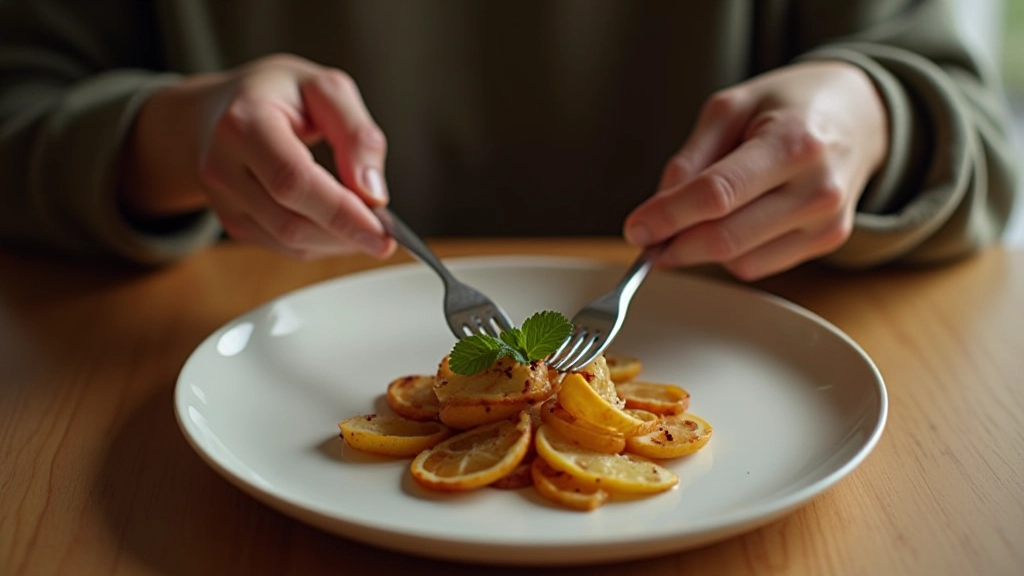
Literally set it on the plate. Chew completely before picking it back up. This single change forces you to slow down.
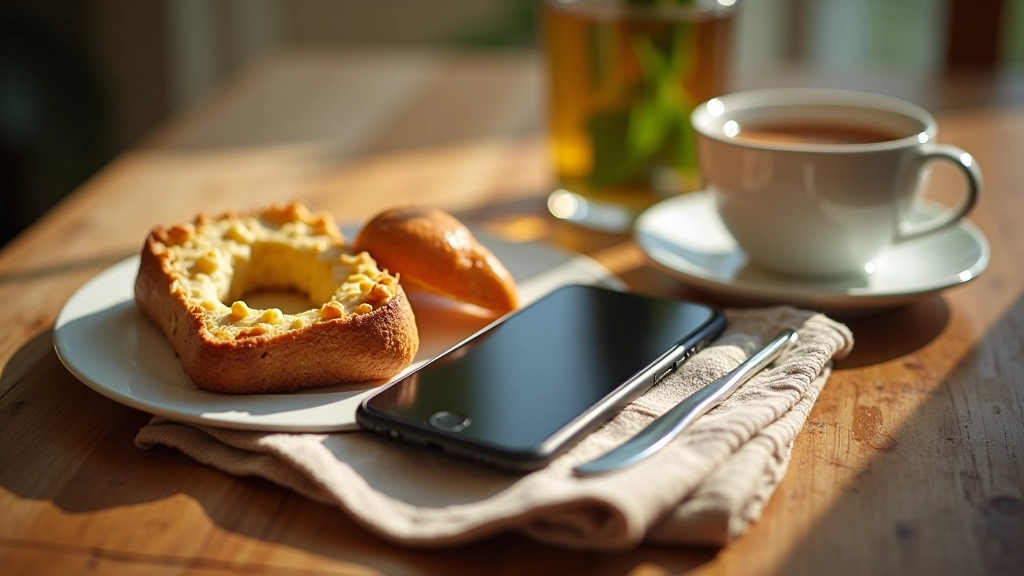
Phone away. Screen off. Eat at a table, not at your desk. You can’t taste food while your brain is split across three things.
Silently or out loud. Sweet? Salty? Bitter? Umami? Where’s the flavor coming from — is it the main ingredient or a spice? This keeps your brain engaged.
This article is for educational purposes only and isn’t a substitute for professional medical or nutritional advice. Everyone’s relationship with food is different, and what works for one person might not work for another. If you have specific health concerns, eating disorders, or nutritional questions, please consult with a qualified healthcare provider or registered dietitian. These practices are meant to support your overall awareness and wellbeing, not to diagnose or treat any condition.
People focus on taste and forget about texture. But texture is half the experience. A crispy exterior with a soft center isn’t just pleasant — it actually helps your brain register satisfaction.
When you eat something mushy that should be crisp, your brain doesn’t get the signal it’s expecting. You keep eating because something feels off. But when the texture is right — when you get that contrast, that surprise — your brain’s happy with less.
This is why the same food can feel satisfying or unsatisfying depending on how it’s prepared. It’s not about the calories or the nutrition. It’s about whether your mouth and brain are actually getting what they need.
Start noticing texture deliberately. Is this crunchy or soft? Smooth or grainy? Chewy or tender? You’ll find you’re more satisfied with smaller portions because you’re actually experiencing the food.
You haven’t lost your ability to taste. You’ve just gotten used to not using it. The good news? It comes back fast. Within a few weeks of actually paying attention, you’ll notice food tastes better. You’ll be satisfied with less. You’ll actually enjoy eating again instead of just doing it on autopilot.
Start small. Pick one meal this week where you put the phone away, slow down, and actually taste what’s in front of you. That’s it. One meal. Notice what happens.
Your taste buds have been waiting for you to show up. It’s time to wake them up.
Join our workshops to learn more techniques for developing a healthier, more aware relationship with food.
Learn About Our Workshops